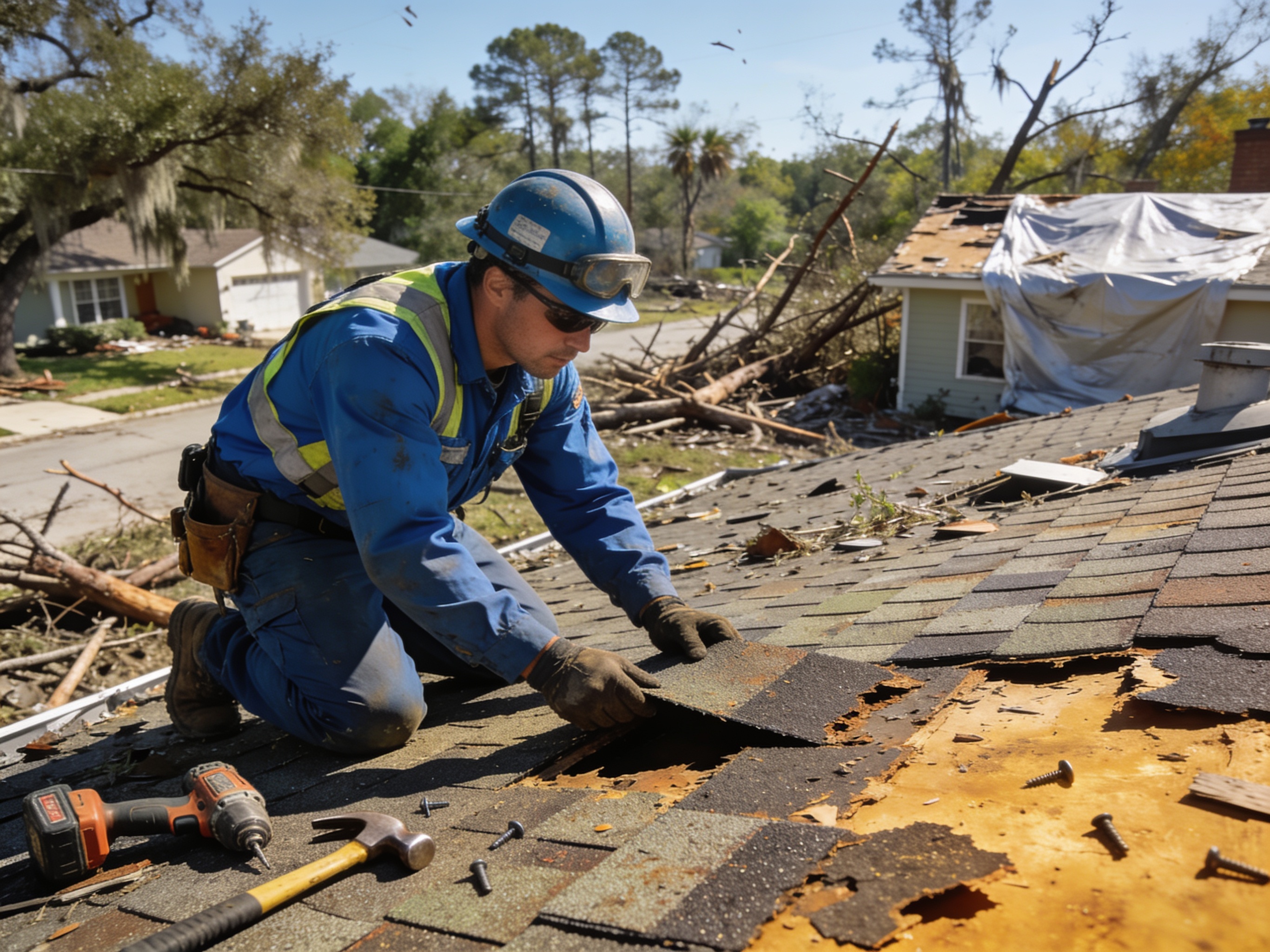
Orlando’s humid subtropical climate brings daily afternoon thunderstorms that dump heavy rain on commercial roofs and parking structures in Downtown Orlando and Thornton Park. Older flat-roof buildings common in these neighborhoods often develop ponding that forces water into HVAC curbs and parapet walls. Once inside, moisture travels along steel decking and reaches tenant spaces on lower floors before anyone notices ceiling stains. Commercial water damage Orlando crews must pull saturated insulation quickly because the high humidity prevents natural drying and mold sets in within forty-eight hours.
In College Park and Mills 50, many commercial properties from the 1960s and 1970s have single-ply membranes that split under wind-driven rain. Technicians cut test holes to map moisture in the decking because infrared alone misses water trapped under ballast. Extraction focuses on removing standing water from loading docks and mechanical rooms first, then placing air movers angled to push moisture out of wall cavities before it reaches electrical panels. Orange County building codes require documentation of moisture readings before any drywall replacement can begin.
Properties near Lake Eola Park and the Dr. Phillips Center face additional runoff from surrounding pavement that funnels water into basements during prolonged storms. Crews deploy containment barriers around electrical rooms and server closets to protect sensitive equipment while drying proceeds. In Ivanhoe Village and Baldwin Park, tree-lined streets mean crews also clear storm debris from roof drains before starting dehumidification. All work is performed with upfront quotes and the customer can inspect drying equipment placement each day.
Technician insight
In Orlando, the thing that catches most people out with Storm Damage Restoration is how afternoon thunderstorms soak the lightweight concrete decks on 1970s commercial buildings in College Park and Mills 50; water travels under the membrane for days before showing up inside, so you have to open the deck early or the job doubles in size.
Thunderstorm Flooding at Winter Park Office
Heavy rain overwhelmed scuppers on a single-story commercial building near Winter Park. Water entered through HVAC curbs and traveled under the roof deck into two tenant suites. Crews extracted standing water from the mechanical room, placed drying equipment angled under the deck, and returned daily until readings dropped below 12 percent. Tenants reopened within five days.
Storm Damage Restoration Services We Offer
✓Commercial Roof Leak Extraction
Rapid removal of rainwater that has entered through storm-damaged membranes on flat roofs common in Downtown Orlando and Winter Park office buildings.
✓Wind-Driven Rain Intrusion Drying
Targeted drying of exterior walls and window assemblies after thunderstorms push water past seals in College Park and Mills 50 storefronts.
✓Flooded Loading Dock Restoration
Pumping and drying of commercial loading areas in Orange County properties where stormwater collects against building foundations.
✓Post-Storm HVAC Moisture Removal
Inspection and drying of rooftop units and ductwork that trap humidity after heavy afternoon rains in the Ivanhoe Village and Baldwin Park corridors.
✓Storm Debris and Water Cleanup
Clearing leaves and branches from drains followed by extraction on properties near Harry P. Leu Gardens and Lake Eola Park after tropical downpours.
Storm Damage Restoration Cost in Orlando, FL
| Service | Typical Range | What Affects It |
|---|---|---|
| Initial Commercial Assessment | $250–$450 | Higher in multi-story buildings in Downtown Orlando |
| Water Extraction (per day) | $600–$1,200 | Varies with volume and access in Thornton Park or College Park |
| Equipment Drying Package | $400–$900 | Based on number of air movers and dehumidifiers needed |
| Debris and Drain Clearing | $150–$350 | Added when tree debris blocks roof drains after storms |
Ranges are typical for Orlando, FL and confirmed with an exact written quote before any work starts.
How it works
- 1
Emergency Assessment
Technician arrives within two hours, documents moisture with meters, and identifies affected commercial spaces in the reported neighborhood.
- 2
Water Extraction
High-volume pumps and wands remove standing water from roofs, docks, and interior floors before humidity rises further.
- 3
Drying and Monitoring
Air movers and dehumidifiers are placed; daily readings track progress until materials reach acceptable moisture levels for rebuild.
- 4
Final Documentation
Readings and photos are compiled for insurance and any required Orange County permit submissions.
Pricing
Upfront written quotes provided after on-site assessment; final cost depends on square footage affected and drying duration.